Important!
These notes are from old SOL study material.
Introduction
The primary aim of philosophy is to understand and help people overcome the social structures by which people are dominated and oppressed.
With the advancement in science and the arrival of the Enlightenment, it was believed that it would lead to human emancipation, but on the other hand, the critical perspective believes that science, like other forms of knowledge, has also been used as an instrument of oppression. Thus, they warn against blind faith in scientific progress and knowledge.
Critical theory was established as a school of thought by the Frankfurt School, influenced by Western Marxist philosophy based upon the ideas of Karl Marx and Sigmund Freud. It developed primarily in Germany in the 1930s.
Major personalities were Theodor Adorno, Herbert Marcuse, Erich Fromm, Walter Benjamin, and Max Horkheimer.
Among them, Max Horkheimer was the first and foremost, as he described critical theory in his essay “Traditional and Critical Theory” for the very first time. For him, traditional theory seeks to understand and explain society, but critical theory is oriented toward critiquing and changing society.
So a theory can only be considered critical if it tries to liberate human beings from enslaving situations.
In that sense, critical theory has emancipatory tendencies like feminist and postmodernist theory.
Both theories have challenged the prevailing norms and seek to rescue people from the illusion of science and established knowledge systems.
On the one hand, feminists challenge the male dominance over the knowledge system and society; on the other hand, postmodernists challenge the modernists' claim about the universality and homogeneity of truth.
Feminist Perspective
Feminists claim that the history of political theory is the history of male theorists, probably because there are very few female political theorists, or sometimes no females at all. Not only political theory but also most of the fields are male-dominated and male-managed.
The term "feminism" first came into use during the period of the 1890s. But the origin of modern feminism can only be traced back to the late seventeenth century, surely not in its present form.
Initially, feminism started in its liberal form, and the first full expression of liberal feminism came in Mary Wollstonecraft’s book “A Vindication of the Rights of Woman” (1792).
In her book, she claimed that, like men, women are also rational beings; hence, they should be entitled to equal rights as men. She challenged her contemporaries for excluding women from enjoying full citizenship rights and argued that women have the same potential for rationality as men, and thus there is no reason for women to not enjoy the same status as men.
Wollstonecraft argued that the cause of gender distinctions is nurture, not nature. Wollstonecraft challenged such appeals to the ‘natural’ differences between men and women.
Enlightened men like John Stuart Mill also advocated for equal rights for men and women like Wollstonecraft.
In his work, “Subjection of Women” (1869), Mill came up with a full-scale analysis of women’s situation and advantages to society for giving them full legal and political equality like men.
He believed that what is now considered the nature of women is completely false and a result of forced suppression and fabricated incitement.
Schools of Feminism
The feminist movement as a whole was concerned with women's rights and advocated for equality of the sexes vis-à-vis male dominance.
But they did not prescribe a universalised single path; different feminists have advocated different roots for the women's cause.
Broadly speaking, there can be three varieties of feminist traditions, namely liberal, socialist, and radical feminism.
1. Liberal Feminism
Liberal feminism emphasizes the equal worth of all individuals, whether male or female. The main focus is on achieving gender equality through political and legal reform within the liberal democratic framework.
Liberal feminism strongly supports laws, political institutions, and education because they are among the most important factors in human development; the main source of inequality is the denial of equal legal and political rights.
Unlike other schools of feminism, liberal feminism did not undermine the existing institutions of power in liberal democratic societies, thus seeming more inclusive and socially progressive.
They also believed that men can be an active participant in the female struggle. They should be treated alike; both can complement each other in their fight, as both are rational.
Some men, like JS Mill, have successfully done so by advocating equal rights for women. The majority of feminists associated with this theory include Mary Wollstonecraft, Elizabeth Cady Stanton, John Stuart Mill, Helen Taylor, Gina Krog, Gloria Steinem, Betty Friedan, Simone de Beauvoir, Rebecca Walker, and many more.
The primary concern for feminists is the liberation of women, and liberal feminists believe that an enlightened version of liberalism can inspire a public philosophy that will help counter the present social injustices.
Many feminists believe that liberalism is the source of the problem and not the solution. Liberal feminists initially wanted equal rights as men, but treating men and women equally leads to two problems. This equal approach denies the very particularities of male and female difference.
First, while taking men as the standard, it undermines the idea of femaleness. A female and a male are two different categories; a woman's identity cannot be compromised to attain equality built on the male parameters.
Secondly, in the process of treating females and males as equals, it fails to accept that women and men are naturally different, and so are their problems. For example, women suffer from menstrual pain, bear children, and denying maternal treatment in the name of equal treatment can be harmful to women here.
2. Socialist Feminism
Socialist feminism focuses on the interconnection between capitalism and patriarchy because they believe that both the capitalist system of production and a gender-biased, institutionalised system of patriarchy are collectively responsible for women’s condition.
This variant of feminism was famous between the 1960s and 1970s. Socialist feminists believe that financial dependency on males is the major cause of women’s oppression and discrimination. In the capitalist system of production, unequal ownership of wealth between men and women further gives a boost to male domination. In this sense, the subjugation of women to men further gives a boost to male domination.
Gender equality can only be established by eliminating this economic, social, and political injustice. Women’s liberation here is imperative to the larger quest for economic, social, and political justice.
Some of the main socialist feminists are Barbara Ehrenreich, Charlotte Perkins Gilman, Johanna Brenner, Silvia Federici, Clara Fraser, Donna Haraway, Emma Goldman, and so on.
Though they did not repeat the mistake of liberal feminists who consider both men and women equal, they too faced certain criticism. Alexandra Kollontai criticised the feminists for neglecting the poor working-class women at the expense of upper-class bourgeois women who were still oppressing the poor working women. So, the feminist movement is actually a movement for the so-called upper-class women’s dominance over the poor lower-class women.
3. Radical Feminism
Radical feminism, as the name suggests, is a perspective that advocates for radical reordering of a male-dominated society. The male-dominated society is characterized by male supremacy in all spheres of life, i.e., the social, economic, and political spheres of life.
Radical feminism advocates for the elimination of male supremacy, and women’s experiences should also be counted along with other divisions like race, class, and sexual orientation.
They proposed that society is basically patriarchal, based upon the oppression of women by men. For this, they wanted to abolish the patriarchy to liberate women from existing social norms and institutions.
Some important radical feminists are Janice, Raymond, Andrea Dworkin, Catharine MacKinnon, Germaine Greer, John Stoltenberg, Monique Wittig, Mary Daly, and Robin Morgan.
They collectively struggled against the sexual objectification of women and opposed the violence against women in the form of rape and other such crimes. They challenged the prescribed traditional gender roles, like limiting women to the household.
They believed that patriarchy is the fundamental reason for the systematic oppression and marginalization of women.
Similarity between different schools of feminism
Besides having divergence of opinion about gender discrimination, its causes, and the possible routes to improve the conditions of women, there are certain points upon which all feminists agree. Three common points all feminists are supporting are:
1. Entrenchment of Gender—
All feminists believe that gender inequality has been common in all societies at all times. All feminists confirm that the unequal division of gender roles has been a common and major issue of concern, as this division based on gender leads to long-term inequality in society. Assigning gender roles like the private sphere for women (the household responsibility) and the public sphere to men (the breadwinner of the household) is problematic for all feminists.
2. Existence of Patriarchy—
'Patriarchy' literally means 'rule of father.' Normally, it indicates a situation where all the necessary and relevant decision in a family is taken only by the male member. There is agreement among feminists that patriarchy exists in society. Kate Millett, who wrote “Sexual Politics” (1970), portrays patriarchy as a "social constant" running through all the political, social, and economic structures. According to her, it is grounded in and operates from the family, which works as a fertile ground for patriarchy. She has suggested a radical solution to patriarchal oppression, and the solution is the abolition of the conventional family system along with consciousness-raising. The existence of patriarchy restricts women’s reasoning and chances to participate in the decision-making process, depriving them of the basic facilities in life.
3. Need for Change—
All feminists believe that there is a deep need for change in the attitude and the manner until now the society is running. A different path can be adopted for the betterment of women; it can either be through a revolution, the idea adopted by the revolutionary feminists, or through strengthening laws, as the liberal feminists wanted. Shulamith Firestone, in her work “The Dialectic of Sex” (1970), advocated an entirely different path to alter the status quo. Unlike socialist feminists, she believes that society cannot be structured through the process of production but through the process of reproduction. She argued that women can only be emancipated by outdoing their biological roles, either by the use of modern technology like test tube babies or through other routes. This is more a kind of individual change she was talking about, but a collective change in the existing institutions, policies, values, and practices is required.
Waves of Feminism
1. First Wave
This wave of feminism first emerged in the 1840s and 1850s and is closely associated with the women’s suffrage movement.
Feminists such as Mary Wollstonecraft, Sylvia, John Stuart Mill, Emmeline, Christabel Pankhurst, and Sojourner Truth advocated for women's rights in the political and economic sphere. Their major argument to strengthen their claim over women’s rights was equality of the sexes.
One group claimed women were equal to men, while another group argued that women were superior to men.
The major demand in this wave was that women’s interests cannot be sacrificed and subject to any reductionism. Women should be able to vote and represent themselves and not be politically dependent on their husbands or other male members of their family. The result was partial success in building consciousness regarding women's rights in Europe.
2. Second Wave
The second wave came in the 1960s with more radical and sometimes revolutionary vigor: the Women’s Liberation Movement. It is associated with the resurgence of feminist activism, specifically radical feminism, in the 1960s and 1970s.
Germaine Greer, Shulamith Firestone, Andrea Dworkin, and Mar Daly are some key feminists in this wave. During this wave of feminism, the primary concern was male violence toward women, particularly sexual violence.
The major focus was on attacking this kind of violence and rejecting feminine norms like sexual submissiveness and participation in beauty practices. Opposed those practices considered common norms in society, such as gendered distinctions of work, and favoured female solidarity and sisterhood.
Post-Feminism
It is characterised by resistance towards the themes of second-wave feminism by feminists like Katie Roiphe, Camille Paglia, Natasha Walter, and Pat Califia.
Feminists in this wave demanded that women should not see themselves as victims but rather consider themselves as active agents. Sexuality should be liberating, and consensual sex should not be treated as taboo.
Feminism should focus on women's material equality rather than the symbolic aspects of gender.
Throughout the different waves of feminism, the phrase 'personal is political’ was used widely, particularly in the second wave. The phrase was popularised by Carol Hanisch through her article “The Personal is Political” in 1969.
Personal is political
The phrase “Personal is Political” means that, unlike the common belief that personal experience is not so personal, it is, in fact, very much political, as what happens in the household is a reflection of political decisions. In her work “Justice, Gender, and the Family," Susan Molar Okin argues that there are four major respects in which the personal is political. Those are:
Power is a distinguishing feature of the political, but the private sphere is also a sphere of power. Power exists within the family, among the gender relations between husband and wife, sister and brother, and so on. For example, domestic violence is a clear reflection of the use of power within the family.
The domestic sphere itself is the result of the political decisions taken in other spheres. In that sense, the political sphere infiltrates the private sphere. State interference in family matters and the institution of marriage reveals this infiltration. Marriages are sanctioned by the state; the state is the supreme authority to decide who can be married and whom you cannot marry. Every state has their own marriage criteria, such as a particular age of marriage, guidelines about homosexual marriages, and other such laws.
Domestic life is where most of an individual’s early socialisation takes place. The private sphere creates the psychological conditions that can govern public life. The social construction (gender division of labour) and patriarchal surroundings (where key decisions are taken by the male member in the family) work as an initial setup.
The division of labour within the majority of families raises psychological and practical barriers against women in all other spheres. The household responsibilities cause women’s underrepresentation in most relevant public institutions like government, judiciary, and economy.
The slogan ‘the personal is political’ shows how deeply entrenched sexual differences are in society and requires us to consider closely the role of the family in perpetuating social inequalities.
Feminists reject the liberal idea that the family is part of a ‘private’ realm where principles of justice cannot be actualised.
Okin advocated the creation of a genderless society through changes in education curriculum and the institution of marriage. She actually brings out the practical significance of the feminist idea of ‘the personal is political.' To remove the difference between personal and political, the difference between sex and gender must be abolished first.
Sex and Gender
Simone de Beauvoir, in “The Second Sex” (1949), argued that women’s sex is defined relative to maleness; a woman is a "not-man." Men, on the other hand, are defined independently of their sex and of women, as autonomous and rational beings. This imbalance resulted in inequality between males and females.
Women need civil liberties, economic independence, removal of passive femininity, and sexual submission to achieve gender equality, and also, women's identity must be redefined independently and autonomously of the male.
Feminists have confirmed that gender and sex are two different things, and the distinction between them is socially constructed, resulting from political arrangements, and is subject to social and political analysis.
Since the seventeenth century, some feminists have argued that women’s nature, which is characterized as natural and universal, is actually artificial and distorted, a product of constructed societal upbringing.
In the words of Simone de Beauvoir, a French writer, “One is not born but rather becomes a woman.” In a later period, this statement formalised into the sex/gender distinction.
As per this distinction, sex is about the biological characteristics of males and females, mainly associated with reproduction. These differences are also seen in the physical size and shape of men and women and the organs and functions of reproduction.
It is distinct from gender, which is a socially constructed attribute of masculinity and femininity, and the social roles and arrangements prescribed by them, like what women should do and what men should do.
Gender refers to those differences that are imposed only by social norms, such as girls should wear pink and boys should wear blue, or norms that women should be kind and men should be tough and rational.
Sex/gender division became quite relevant because socially constructed gender division forced women to sacrifice their careers for parenthood, do the majority of unpaid domestic work, and be made vulnerable through the institution of marriage.
These differences between men and women are not biological but stem from unequal power distribution.
All feminists share a concern for liberating women and adopt diverse theoretical positions to identify these injustices.
In accordance with their findings, they present different prescriptions of what needs to be done to create a more equal society.
But some feminists oppose the sex/gender distinction, as they believe that biological categories of male and female are not as distinct as they seem. It is society and not biology that makes these categories so significant.
Conclusion
Feminist political thought has primarily focused on at least two issues. First, it analyzes and explains the processes, institutions, and practices through which women have been subordinated to men. Women have been marginalised through a set of constructed societal norms.
Second, feminism is not limited to the analysis of the problem, but it also tries to formulate the most appropriate and effective ways to challenge this subordination and domination.
Feminists have a firm belief that gender is a political construct, normally based upon stereotyping of the ‘feminine’ and ‘masculine’ ideas about gender behaviour and their social roles. To be a political theory as a ‘feminist’ theory, it should emphasise the elimination of oppression of women by men and also by women in all forms. Feminism should not be misunderstood as being against men, as it is not against men but against male dominance over women or, for that matter, any such domination either by men or women.
It is characterized by its political stance and the attempt to advance the social role of women. They have highlighted the problem of unequal political relationships between the sexes, the supremacy of men in every sphere, and the subjection of women in most societies.
Karl Marx famously said, ‘The philosophers have only interpreted the world.' in various ways, but the point is to change it.'
Feminism has not merely reinterpreted the contribution of major theorists and shed new light upon established concepts such as power, domination, and equality, but also introduced a new sensitivity and language into political theory related to ideas such as connection, voice, and difference.
In “Sex and Social Justice," Martha Nussbaum defends a kind of feminism that has the following five features. First, it should be internationalist, not limited to a particular region or nation; second, humanist humanity should be the highest consideration; third, liberal means advocating equal rights for all; fourth, the concern with the social shaping of preference and desire; and finally, the concern for sympathetic understanding.
Post Modernism
Postmodernism is a late 20th-century movement, a product of modernism and modernist values, outlined by a broad level of skepticism, relativism, and subjectivism against the prescribed and established set of knowledge.
Other features include the suspicion towards reason and a deep sympathy for the role of ideology in nourishing political and economic power.
It opposes the modernist claim that objective reality exists and argues that scientists' and historians' explanatory statements can be objectively true or false.
It dismisses the modernist idea of objective natural reality and dubs it a kind of naive or immature realism. They also reject objectivity and conclude that there is no such thing as truth.
The term is associated with Jean-François Lyotard, as it first came in 1979 with the publication of his “The Postmodern Condition."
Unlike common beliefs and collective claims of modernists, postmodernists have denied faith in science and technology as the instruments of human progress and believe that the misguided objective of scientific and technological knowledge led to the development of destructive technologies.
It was widely used as an evil weapon for killing on a massive scale in World War II and other consecutive wars.
Postmodernism is not a single unified perspective or a systematic universal philosophy. It includes a range of theorists like Francois Lyotard, Mikhail Bakhtin, Paul De Man, Michel Foucault, Roland Barthes, Jean Baudrillard, William E. Connolly, Jacques Derrida, Jacques Lacan, Gaston Bachelard, Richard Rorty, Herbert Marcuse, Luce Irigaray, and others.
Defining Postmodernism
Martin Heidegger, a German philosopher and postmodern thinker, along with Lyotard, has popularised the term "postmodern." They define it as 'incredulity (disbelief) towards meta-narratives.' It means that postmodernism is about the distrust towards all those theories and ideologies that claim to be universal theories.
Friedrich Nietzsche, another German philosopher and also one of the postmodernists, rejected all the moral and political principles as mere nihilism. He also used the phrase ‘death of god’ widely to denote the triumph of reason, enlightenment, and scientific reasoning over the moral values in the West.
Michel Foucault was mainly concerned with the forms of knowledge. He believed that truth is always socially constructed.
Derrida’s deconstruction is another approach to understanding postmodernism. He opposed the claims of a single truth and knowledge. Like Derrida, Rorty also rejects the conception that there is an objective point of view.
The wide range of discussion between these thinkers suggests that there is not a single and agreeable definition of postmodernism. Scholars themselves involved in this process of understanding postmodernist ideas deny the possibility of attaining any clear meaning and definition of the concept.
In reality, there is some kind of confusion and chaos linked to the term.
In his book, “The Postmodern Condition: A Report on Knowledge” (1979), François Lyotard rejects all grand narratives. He also rejects the claims of enlightenment, the progress of the world, the all-knowing ability of science, and the possibility of absolute freedom as such.
In a way, he challenged the supremacy of science and technology as a final source of knowledge and truth.
According to Jane Bennett, the term "postmodernism" can be understood in three ways:
First, as a sociological designation for an epochal shift in the way collective life is organised (from centralised and hierarchical control towards a network structure).
Second, as an aesthetic genre (literature that experiments with non-linear narration, a playful architecture of mixed style, and an appreciation of popular culture that complicates the distinction between high and low).
Finally, third, as a set of philosophical critiques of teleological or rationalist conceptions of nature, history, power, freedom, and subjectivity.
Postmodernism participates in all three ways, but most intensively in the third way.
Difference between Modernism and Postmodernism
Postmodernist thought resulted from opposition to and repudiation of modernist thought. It challenged most modernist ideals, but modernism and postmodernism are completely contradictory in several respects.
Modernism has a deep faith in the idea of a grand narrative, as it believes that there can be a grand theory. On the other hand, postmodernists challenge this idea and see it with skepticism.
With the arrival of scientific experimentation and stress upon factual knowledge, modernism starts claiming the existence of universal objective truth, but for postmodernism there is no such thing as universal knowledge, and there are always multiple truths.
There cannot be linear logic and reasoning; rather, knowledge is decentralised. For postmodernists, subjective experience and diversity have their own place, as uniformity and homogeneity are clear myths.
Modernism | Postmodernism |
Grand Narrative | Scepticism against grand theory |
Universal objective truth | Deconstruction/multiple truth |
Linear logic and reasoning | Decentralisation of knowledge |
Uniformity and homogeneity | Subjective experience and diversity |
Opposition of modernism
The difference between modernism and postmodernism and the emergence of postmodernism in modernist antipathy is evident. Modernist political theorists like Machiavelli, Montesquieu, Hobbes, Locke, Rousseau, Voltaire, and others have contributed to the idea of representative democracy, rational stature, formal equality, and other relevant concepts.
Immanuel Kant’s assertion about an individual’s autonomy further strengthened the emancipatory quest of modernity. Scholars in this period all around the world have continuously defended the void promise of emancipation through modernity. In this way, modernists, also seen as rationalists, have superadded their power and continue to maintain themselves.
One of the vehement critics of this conception of modernity is Alasdair MacIntyre, who was not a postmodernist; though, in his book “After Virtue," he argues that it was only in the latter part of the seventeenth century and the dawn of the eighteenth century that Northern European culture started projecting modernity as unquestioned discourse through the Enlightenment assignment.
Later, postmodernists confront the Universalist approach, as there cannot be a universal answer to any question. There is no single theory that holds the transcendental truth, because there is no single and simple way of interpreting the historical process.
The claim of postmodernism was simple: there is no objective value, no established reality, and no universal truth. Rather, there are numerous realities, diverse truths, and a variety of people with their own set of values and realities.
Postmodernists challenged modernist projections and questioned established ways of understanding. It interrogates the universality, certainty, and objectivity linked to modernism and any such mode of thinking.
Postmodernism is characterised by a direct rejection of common philosophical viewpoints that went unchallenged during the 18th-century Enlightenment.
Postmodernist roots are developed on the denial and opposition of the modernist land.
The differences between modernists and post-modernists are the following:
Reality: In the very first place, it challenged the modernist claim that there is an objective natural reality. Postmodernists called this idea a kind of void realist ideal.
Reason & Logic: Unlike the modernist claim that reason and logic are universally valid, like laws and domains of knowledge are the same for everyone or, let’s say, apply equally. Instead, for postmodernists, whether it is reason or logic, they are merely conceptual constructs and only valid within the established set of intellectual traditions in which they are often used.
Human Psychology: Modernists believe that human nature is derived from birth itself rather than learned or induced through social forces. Postmodernists, rather, insist that almost all aspects of human psychology are wholly socially determined.
Truth: The explanatory and descriptive statements of historians and scientists can be objectively true or false in principle. But the postmodernists have denied the possibility of any such truth.
Human Psychology and Social Progress: Modernists believe that human beings, for the better, are likely to change themselves and their societies through the use of reason and logic and through more specialised scientific tools. For them, it is reasonable to anticipate that subsequent societies will be more just, more full, more humane, more enlightened, and more prosperous, in a way somewhat better than what they are now. But postmodernists have no such faith in science and technology as a tool of human progress and an enlightened society.
General theory: It is possible for modernists to construct general theories that can explain several aspects of the natural and social world within a given realm of knowledge, for example, a general theory of human history in the form of dialectical materialism. Postmodernists have denied any such possibility.
Knowledge: Human beings are capable of acquiring knowledge about natural reality, and on the basis of evidence and certain well-founded principles, this knowledge can be ultimately justified. Postmodernists reject this kind of philosophical foundationalism.
Summary:
Concept | Modernist Viewpoint | Postmodernist Counter-Viewpoint |
Truth & Reality | Natural reality is objective; statements by scientists and historians can be fundamentally true or false. | Rejects objective reality as a "void realist ideal"; claims no single, transcendental truth exists. |
Reason & Logic | Universally valid laws that apply equally to all human beings. | Mere conceptual constructs valid only within specific intellectual traditions. |
Human Psychology | Human nature is innate and present from birth. | Human psychology is entirely determined and shaped by social forces. |
Social Progress | Societies naturally upgrade and become more just, humane, and prosperous through science and logic. | Lacks faith in science and technology as tools for guaranteed human progress or social enlightenment. |
Knowledge & Theories | Broad, foundational theories can successfully explain various aspects of the natural and social world. | Denies the possibility of universal theories; rejects philosophical foundationalism. |
Foucault and Derrida
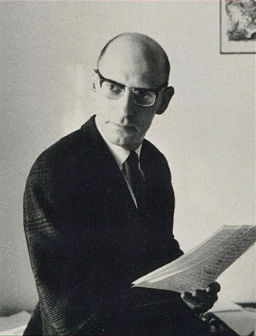
Michel Foucault
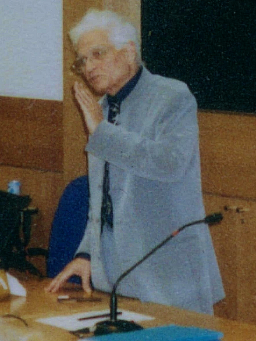
Jacques Derrida
Michel Foucault is recognized as a significant postmodernist, defining postmodernism through the concepts of power and discourse.
He shows how discourse on criminality reflects societal views on crime, emphasising that power and knowledge are intertwined.
In "Discipline and Punish" and "The History of Sexuality," Foucault discusses the emergence of disciplinary and regulatory biopowers, focusing on how society excludes marginalised individuals.
Modern institutions like hospitals, schools, and prisons serve as tools of discipline, shaping and normalising human behaviour.
Normalization is not overtly coercive; individuals become willing participants in their own oppression, legitimizing state control.
Foucault critiques the oppressive nature of modern liberal societies, exacerbated by advancements in science and technology that increase surveillance.
His concept of the panopticon exemplifies the state's desire to monitor and control individuals.
Jacques Derrida, another prominent postmodernist, challenges the nature of knowledge and truth through deconstruction, arguing that texts can have multiple interpretations.
Derrida posits that efforts to represent reality do not yield objective truths but various representations of social phenomena.
Main Postmodernist Thinkers
Jean-François Lyotard
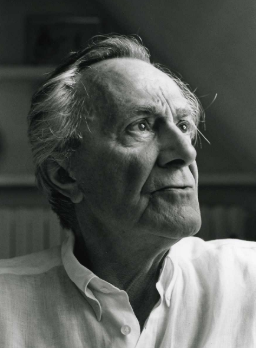
Jean-François Lyotard is a key figure in postmodern philosophy, particularly known for his work "The Postmodern Condition: A Report on Knowledge."
The book is regarded as a foundational text for understanding postmodernism, focusing on the changing nature of knowledge and the shift from grand narratives to little narratives.
Lyotard adopts the views of Daniel Bell and Allen Touraine, asserting that society has moved from an industrial to a post-industrial phase where knowledge is the main vehicle for production.
He argues that in the postmodern context, knowledge has become a commodity essential for survival and profit, diminishing the pursuit of knowledge for universal or emancipatory goals.
According to Lyotard, the control of knowledge translates into political power, predicting future conflicts over information rather than territory.
He critiques grand narratives—totalizing theories that claim to explain broad aspects of life—highlighting their decline in relevance.
Lyotard denounces the dominance of metanarratives such as Christianity, liberal humanism, and Marxism, arguing they no longer provide legitimacy or a basis for critique.
He posits that the contemporary world is characterized by a diversity of little narratives and emphasizes localized interventions rather than universal theories or truths.
His stance advocates for the recognition and celebration of differences and multiple perspectives in knowledge.
Jacques Derrida
Jacques Derrida was a French philosopher known for initiating the concept of deconstruction, a form of semiotic analysis.
He is a key figure in post-structuralism and postmodern philosophy, particularly critiquing Western philosophical traditions.
Described in his book "Of Grammatology," deconstruction challenges foundational assumptions and is more a movement than a method.
Derrida emphasises close readings of texts to uncover internal conflicts and contradictions, asserting that texts deconstruct themselves rather than being externally deconstructed.
He critiques logocentrism, or the belief in stable meanings and absolute truths, which he argues is built on unjustifiable binary oppositions.
The privileged term within these binaries is always dependent on the marginalized term, leading to a recognition that meaning is never pure.
Derrida advocates for writing's precedence over speech, believing writing reveals the endless differences in meaning, while speech conceals these gaps.
He dismisses the notion of intentionality and authorship, promoting the idea that readers construct their own meanings.
Deconstruction aims to challenge logocentrism and phonocentrism, destabilizing fixed meanings and exposing contradictions within texts.
Through this approach, Derrida illustrates the dynamic play of meaning, rejecting the pursuit of a singular, true meaning in texts.
Michel Foucault
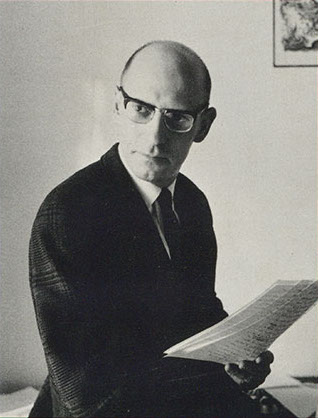
Michel Foucault is a key postmodern theorist, influencing multiple disciplines, including political science, sociology, and medicine.
He utilized two main methodologies in his work: Archaeology of Knowledge (focused on specific historical moments) and Genealogy of Power (addressing historical processes).
Discourse is central to Foucault’s analysis, shaping how subjects think and act, and is seen as a construct of truth and power.
His early works, like "Madness and Civilisation," illustrate the shift in the discourse surrounding madness from moral corruption to a medical understanding as a mental illness.
Foucault critiques the Enlightenment project of humanism, rejecting the notion of the independent human subject and opposing structuralist traditions.
In his genealogical analyses, he examined power and knowledge dynamics, asserting that they are inherently linked and that societal norms are maintained through discourse.
Foucault posits a diffuse understanding of power, which is exercised in social relationships rather than being localized.
He contends that power is productive and constitutive, generating meanings and social orders, and is interwoven with knowledge.
Resistance is inherent to power relations, indicating that individuals can reconstitute power dynamics.
He critiques traditional views of sovereignty in political theory, advocating for a focus on governmentality, or disciplinary power, which regulates behavior through perceived freedoms.
Key examples include surveillance, where societal norms compel self-censorship under the guise of security.
Foucault identifies a carceral society where social institutions discipline and normalise behaviour, contributing to state power.
He suggests a triangular relationship between sovereignty, discipline, and government, all targeting population control through mechanisms of security.disciplinary power
Instruments of include hierarchical observation and the ability to establish norms and enforce punishment for deviations.
Examination exemplifies the power-knowledge relationship, where those who administer exams gain knowledge and power.
Foucault critiques the Enlightenment ideals of human liberation and objective knowledge, asserting that 19th-century disciplinary regimes, aimed at prisoner reform, were as repressive as previous systems.
He posits that knowledge is intertwined with power, and truth is inherently political, produced through constraints.
Foucault states, “Truth is a thing of this world: it is produced only by virtue of multiple forms of constraint. And it induces regular effects of power.”
Laclau and Mouffe
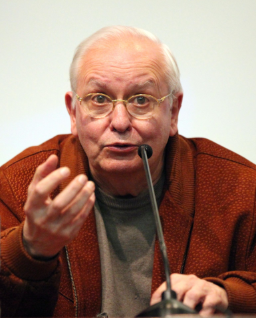
Ernesto Laclau
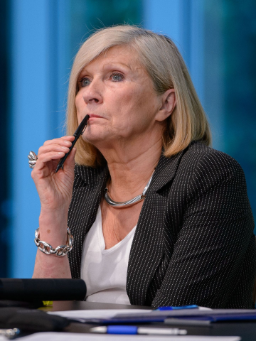
Chantal Mouffe
The works of Ernesto Laclau and Chantal Mouffe are central to post-Marxist and postmodern thought.
They argue against material interests, claiming these are discursively constructed.
Their analysis critiques the classical Marxian concept of "class," emphasising the complexity of social identities.
Laclau and Mouffe propose "Radical Democracy," which advocates for multiple democratic discourses (e.g., women, Blacks, and ecologists) under a unified framework.
They believe that simply abolishing capitalism will not address other forms of inequality; a broader perspective is essential.
Their post-Marxism, influenced by thinkers like Lyotard and Foucault, challenges essentialism and foundationalism.
They celebrate anti-foundationalism and critique Enlightenment ideals of progress through reason and science.
Postmodernism frames truth and knowledge as socially constructed and tied to power dynamics.
It rejects meta-narratives and embraces multiple meanings, promoting relativism and indeterminism.
The approach is not anti-theoretical but seeks to refine theorization reflexively.
It questions binary categorizations of rational/irrational and critiques the market orientation of knowledge.
The focus is on the historical context and conditionality of phenomena and theories.
Critique of Postmodernism
Undermines Universal Values: Postmodernist relativism and anti-foundationalism destroy the possibility of establishing any universal truth or core political values.
Trivialises Historical Injustices: Accepting this premise implies that the entire history of human injustice—and the struggle of the weak and marginalised against it—is meaningless and absurd.
Threatens Enlightenment Movements: Many small, progressive movements that are driven by Enlightenment ideals are actively endangered by postmodernist thought.
Fails Its Own Goals: Postmodernists are unable to sustain or achieve the very goal of human emancipation that they originally intended to support.
Lacks Coherence and Clarity: The discourse lacks a common, shared understanding and centres on deconstructing standard categories, making it appear ambiguous, incomprehensible, and fragmented.
Earns Severe Criticism: Because of these flaws, postmodernism is routinely condemned as being nihilistic, immoral, and politically irresponsible.
Conclusion
Promotes Inclusivity and Democracy: Postmodernists view their theory as uniquely democratic because it challenges the unjust dominance of Enlightenment ideals over the valid perspectives of marginalized groups.
Underpins Identity Politics: During the 1980s and 1990s, academic advocates for various ethnic, cultural, racial, and religious groups embraced postmodernism, making it the unofficial philosophy of "identity politics."
Rejects Absolute Truth: Postmodernism asserts that there is no fixed or universal truth, stating instead that truth constantly shifts with new events and discoveries.
Recognises Global Interconnectedness: The ideology notes that scientific developments in one part of the world heavily influence modern social and political events elsewhere.
Encourages Expression and Dialogue: The framework embraces individual expression, cross-cultural dialogue, and open debate as essential parts of society.
Exercise Question
Answer
Feminist Perspective
Feminists claim that the history of political theory is the history of male theorists, probably because there are very few female political theorists, or sometimes no females at all. Not only political theory but also most of the fields are male-dominated and male-managed.
The term "feminism" first came into use during the period of the 1890s. But the origin of modern feminism can only be traced back to the late seventeenth century, surely not in its present form.
Initially feminist started in its liberal form, and the first full expression of liberal feminism came in Mary Wollstonecraft’s book “A Vindication of the Rights of Woman” (1792).
In her book, she claimed that, like men, women are also rational beings; hence, they should be entitled to equal rights as men. She challenged her contemporaries for excluding women from enjoying full citizenship rights and argued that women have the same potential for rationality as men, and thus there is no reason for women to not enjoy the same status as men.
Wollstonecraft argued that the cause of gender distinctions is nurture, not nature. Wollstonecraft challenged such appeals to the ‘natural’ differences between men and women.
Enlightened men like John Stuart Mill also advocated for equal rights for men and women like Wollstonecraft.
In his work, “Subjection of Women” (1869), Mill came up with a full-scale analysis of women’s situation and advantages to society for giving them full legal and political equality like men.
He believed that what is now considered the nature of women is completely false and a result of forced suppression and fabricated incitement.
Schools of Feminism
The feminist movement as a whole was concerned with women's rights and advocated for equality of the sexes vis-à-vis male dominance.
But they did not prescribe a universalised single path; different feminists have advocated different roots for the women's cause.
Broadly speaking, there can be three varieties of feminist traditions, namely liberal, socialist, and radical feminism.
1. Liberal Feminism
Liberal feminism emphasizes the equal worth of all individuals, whether male or female. The main focus is on achieving gender equality through political and legal reform within the liberal democratic framework.
Liberal feminism strongly supports laws, political institutions, and education because they are among the most important factors in human development; the main source of inequality is the denial of equal legal and political rights.
Unlike other schools of feminism, liberal feminism did not undermine the existing institutions of power in liberal democratic societies, thus seeming more inclusive and socially progressive.
They also believed that men can be an active participant in the female struggle. They should be treated alike; both can complement each other in their fight, as both are rational.
Some men, like JS Mill, have successfully done so by advocating equal rights for women. The majority of feminists associated with this theory include Mary Wollstonecraft, Elizabeth Cady Stanton, John Stuart Mill, Helen Taylor, Gina Krog, Gloria Steinem, Betty Friedan, Simone de Beauvoir, Rebecca Walker, and many more.
The primary concern for feminists is the liberation of women, and liberal feminists believe that an enlightened version of liberalism can inspire a public philosophy that will help counter the present social injustices.
Many feminists believe that liberalism is the source of the problem and not the solution. Liberal feminists initially wanted equal rights as men, but treating men and women equally leads to two problems. This equal approach denies the very particularities of male and female difference.
First, while taking men as the standard, it undermines the idea of femaleness. A female and a male are two different categories; a woman's identity cannot be compromised to attain equality built on the male parameters.
Secondly, in the process of treating females and males as equals, it fails to accept that women and men are naturally different, and so are their problems. For example, women suffer from menstrual pain, bear children, and denying maternal treatment in the name of equal treatment can be harmful to women here.
2. Socialist Feminism
Socialist feminism focuses on the interconnection between capitalism and patriarchy because they believe that both the capitalist system of production and a gender-biased, institutionalised system of patriarchy are collectively responsible for women’s condition.
This variant of feminism was famous between the 1960s and 1970s. Socialist feminists believe that financial dependency on males is the major cause of women’s oppression and discrimination. In the capitalist system of production, unequal ownership of wealth between men and women further gives a boost to male domination. In this sense, the subjugation of women to men further gives a boost to male domination.
Gender equality can only be established by eliminating this economic, social, and political injustice. Women’s liberation here is imperative to the larger quest for economic, social, and political justice.
Some of the main socialist feminists are Barbara Ehrenreich, Charlotte Perkins Gilman, Johanna Brenner, Silvia Federici, Clara Fraser, Donna Haraway, Emma Goldman, and so on.
Though they did not repeat the mistake of liberal feminists who consider both men and women equal, they too faced certain criticism. Alexandra Kollontai criticised the feminists for neglecting the poor working-class women at the expense of upper-class bourgeois women who were still oppressing the poor working women. So, the feminist movement is actually a movement for the so-called upper-class women’s dominance over the poor lower-class women.
3. Radical Feminism
Radical feminism, as the name suggests, is a perspective that advocates for radical reordering of a male-dominated society. The male-dominated society is characterized by male supremacy in all spheres of life, i.e., the social, economic, and political spheres of life.
Radical feminism advocates for the elimination of male supremacy, and women’s experiences should also be counted along with other divisions like race, class, and sexual orientation.
They proposed that society is basically patriarchal, based on the oppression of women by men. For this, they wanted to abolish the patriarchy to liberate women from existing social norms and institutions.
Some important radical feminists are Janice, Raymond, Andrea Dworkin, Catharine MacKinnon, Germaine Greer, John Stoltenberg, Monique Wittig, Mary Daly, and Robin Morgan.
They collectively struggled against the sexual objectification of women and opposed the violence against women in the form of rape and other such crimes. They challenged the prescribed traditional gender roles, like limiting women to the household.
They believed that patriarchy is the fundamental reason for the systematic oppression and marginalization of women.
Answer
Feminist Perspective
Feminists claim that the history of political theory is the history of male theorists, probably because there are very few female political theorists, or sometimes no females at all. Not only political theory but also most of the fields are male-dominated and male-managed.
The term "feminism" first came into use during the period of the 1890s. But the origin of modern feminism can only be traced back to the late seventeenth century, surely not in its present form.
Initially feminist started in its liberal form, and the first full expression of liberal feminism came in Mary Wollstonecraft’s book “A Vindication of the Rights of Woman” (1792).
In her book, she claimed that, like men, women are also rational beings; hence, they should be entitled to equal rights as men. She challenged her contemporaries for excluding women from enjoying full citizenship rights and argued that women have the same potential for rationality as men, and thus there is no reason for women to not enjoy the same status as men.
Wollstonecraft argued that the cause of gender distinctions is nurture, not nature. Wollstonecraft challenged such appeals to the ‘natural’ differences between men and women.
Enlightened men like John Stuart Mill also advocated for equal rights for men and women like Wollstonecraft.
In his work, “Subjection of Women” (1869), Mill came up with a full-scale analysis of women’s situation and advantages to society for giving them full legal and political equality like men.
He believed that what is now considered the nature of women is completely false and a result of forced suppression and fabricated incitement.
Waves of Feminism
1. First Wave
This wave of feminism first emerged in the 1840s and 1850s and is closely associated with the women’s suffrage movement.
Feminists such as Mary Wollstonecraft, Sylvia, John Stuart Mill, Emmeline, Christabel Pankhurst, and Sojourner Truth advocated for women's rights in the political and economic sphere. Their major argument to strengthen their claim over women’s rights was equality of the sexes.
One group claimed women were equal to men, while another group argued that women were superior to men.
The major demand in this wave was that women’s interests cannot be sacrificed and subject to any reductionism. Women should be able to vote and represent themselves and not be politically dependent on their husbands or other male members of their family. The result was partial success in building consciousness regarding women's rights in Europe.
2. Second Wave
The second wave came in the 1960s with more radical and sometimes revolutionary vigor: the Women’s Liberation Movement. It is associated with the resurgence of feminist activism, specifically radical feminism, in the 1960s and 1970s.
Germaine Greer, Shulamith Firestone, Andrea Dworkin, and Mar Daly are some key feminists in this wave. During this wave of feminism, the primary concern was male violence toward women, particularly sexual violence.
The major focus was on attacking this kind of violence and rejecting feminine norms like sexual submissiveness and participation in beauty practices. Opposed those practices considered common norms in society, such as gendered distinctions of work, and favoured female solidarity and sisterhood.
Answer
Personal is political
The phrase “Personal is Political” means that, unlike the common belief that personal experience is not so personal, it is, in fact, very much political, as what happens in the household is a reflection of political decisions. In her work “Justice, Gender, and the Family," Susan Molar Okin argues that there are four major respects in which the personal is political. Those are:
Power is a distinguishing feature of the political, but the private sphere is also a sphere of power. Power exists within the family, among the gender relations between husband and wife, sister and brother, and so on. For example, domestic violence is a clear reflection of the use of power within the family.
The domestic sphere itself is the result of the political decisions taken in other spheres. In that sense, the political sphere infiltrates the private sphere. State interference in family matters and the institution of marriage reveals this infiltration. Marriages are sanctioned by the state; the state is the supreme authority to decide who can be married and whom you cannot marry. Every state has their own marriage criteria, such as a particular age of marriage, guidelines about homosexual marriages, and other such laws.
Domestic life is where most of an individual’s early socialisation takes place. The private sphere creates the psychological conditions that can govern public life. The social construction (gender division of labour) and patriarchal surroundings (where key decisions are taken by the male member in the family) work as an initial setup.
The division of labour within the majority of families raises psychological and practical barriers against women in all other spheres. The household responsibilities cause women’s underrepresentation in most relevant public institutions like government, judiciary, and economy.
The slogan ‘the personal is political’ shows how deeply entrenched sexual differences are in society and requires us to consider closely the role of the family in perpetuating social inequalities.
Feminists reject the liberal idea that the family is part of a ‘private’ realm where principles of justice cannot be actualised.
Okin advocated the creation of a genderless society through changes in education curriculum and the institution of marriage. She actually brings out the practical significance of the feminist idea of ‘the personal is political.' To remove the difference between personal and political, the difference between sex and gender must be abolished first.
Answer
Sex and Gender
The sex-gender distinction is a foundational and fiercely contested pillar of feminist theory, originally deployed to counter biological determinism and to argue that women's social subordination is culturally constructed rather than naturally ordained
Simone de Beauvoir, in “The Second Sex” (1949), argued that women’s sex is defined relative to maleness; a woman is a "not-man." Men, on the other hand, are defined independently of their sex and of women, as autonomous and rational beings. This imbalance resulted in inequality between males and females.
Women need civil liberties, economic independence, removal of passive femininity, and sexual submission to achieve gender equality, and also, women's identity must be redefined independently and autonomously of the male.
Feminists have confirmed that gender and sex are two different things, and the distinction between them is socially constructed, resulting from political arrangements, and is subject to social and political analysis.
Since the seventeenth century, some feminists have argued that women’s nature, which is characterized as natural and universal, is actually artificial and distorted, a product of constructed societal upbringing.
In the words of Simone de Beauvoir, a French writer, “One is not born but rather becomes a woman.” In a later period, this statement formalised into the sex/gender distinction.
As per this distinction, sex is about the biological characteristics of males and females, mainly associated with reproduction. These differences are also seen in the physical size and shape of men and women and the organs and functions of reproduction.
It is distinct from gender, which is a socially constructed attribute of masculinity and femininity, and the social roles and arrangements prescribed by them, like what women should do and what men should do.
Gender refers to those differences that are imposed only by social norms, such as girls should wear pink and boys should wear blue, or norms that women should be kind and men should be tough and rational.
Sex/gender division became quite relevant because socially constructed gender division forced women to sacrifice their careers for parenthood, do the majority of unpaid domestic work, and be made vulnerable through the institution of marriage.
These differences between men and women are not biological differences but are caused by unequal power distribution between men and women.
All feminists are united in their concern for liberating women and adopt diverse theoretical positions for identifying these injustices.
In accordance with their findings, they present different prescriptions of what needs to be done to create a more equal society.
But some feminists oppose the sex/gender distinction, as they believe that biological categories of male and female are not as distinct as they seem. It is society and not biology that makes these categories so significant.
Answer
Post Modernism
Postmodernism is a late 20th-century movement, a product of modernism and modernist values, outlined by a broad level of skepticism, relativism, and subjectivism against the prescribed and established set of knowledge.
Other features include the suspicion towards reason and a deep sympathy for the role of ideology in nourishing political and economic power.
It opposes the modernist claim that objective reality exists and argues that scientists' and historians' explanatory statements can be objectively true or false.
It dismisses the modernist idea of objective natural reality and dubs it a kind of naive or immature realism. They also reject objectivity and conclude that there is no such thing as truth.
The term is associated with Jean-François Lyotard, as it first came in 1979 with the publication of his “The Postmodern Condition."
Unlike common beliefs and collective claims of modernists, postmodernists have denied faith in science and technology as the instruments of human progress and believe that the misguided objective of scientific and technological knowledge led to the development of destructive technologies.
It was widely used as an evil weapon for killing on a massive scale in World War II and other consecutive wars.
Postmodernism is not a single unified perspective or a systematic universal philosophy. It includes a range of theorists like Francois Lyotard, Mikhail Bakhtin, Paul De Man, Michel Foucault, Roland Barthes, and Jean Baudrillard, William E. Connolly, Jacques Derrida, Jacques Lacan, Gaston Bachelard, Richard Rorty, Herbert Marcuse, Luce Irigaray, and others.
Defining Postmodernism
Martin Heidegger, a German philosopher and postmodern thinker, along with Lyotard, has popularised the term "postmodern." They define it as 'incredulity (disbelief) towards meta-narratives.' It means that postmodernism is about the distrust towards all those theories and ideologies that claim to be universal theories.
Friedrich Nietzsche, another German philosopher and also one of the postmodernists, rejected all the moral and political principles as mere nihilism. He also used the phrase ‘death of god’ widely to denote the triumph of reason, enlightenment, and scientific reasoning over the moral values in the West.
Michel Foucault was mainly concerned with the forms of knowledge. He believed that truth is always socially constructed.
Derrida’s deconstruction is another approach to understanding postmodernism. He opposed the claims of a single truth and knowledge. Like Derrida, Rorty also rejects the conception that there is an objective point of view.
The wide range of discussion between these thinkers suggests that there is not a single and agreeable definition of postmodernism. Scholars themselves involved in this process of understanding postmodernist ideas deny the possibility of attaining any clear meaning and definition of the concept.
In reality, there is some kind of confusion and chaos linked to the term.
In his book, “The Postmodern Condition: A Report on Knowledge” (1979), François Lyotard rejects all grand narratives. He also rejects the claims of enlightenment, the progress of the world, the all-knowing ability of science, and the possibility of absolute freedom as such.
In a way, he challenged the supremacy of science and technology as a final source of knowledge and truth.
According to Jane Bennett, the term "postmodernism" can be understood in three ways:
First, as a sociological designation for an epochal shift in the way collective life is organised (from centralised and hierarchical control towards a network structure).
Second, as an aesthetic genre (literature that experiments with non-linear narration, a playful architecture of mixed style, and an appreciation of popular culture that complicates the distinction between high and low).
Finally, third, as a set of philosophical critiques of teleological or rationalist conceptions of nature, history, power, freedom, and subjectivity.
Postmodernism participates in all three ways, but most intensively in the third way.
Difference between Modernism and Postmodernism
Postmodernist thought resulted from opposition to and repudiation of modernist thought. It challenged most modernist ideals, but modernism and postmodernism are completely contradictory in several respects.
Modernism has a deep faith in the idea of a grand narrative, as it believes that there can be a grand theory. On the other hand, postmodernists challenge this idea and see it with skepticism.
With the arrival of scientific experimentation and stress upon factual knowledge, modernism starts claiming the existence of universal objective truth, but for postmodernism there is no such thing as universal knowledge, and there are always multiple truths.
There cannot be linear logic and reasoning; rather, knowledge is decentralised. For postmodernists, subjective experience and diversity have their own place, as uniformity and homogeneity are clear myths.
Modernism | Postmodernism |
Grand Narrative | Skepticism against grand theory |
Universal objective truth | Deconstruction/multiple truth |
Linear logic and reasoning | Decentralizing of knowledge |
Uniformity and homogeneity | Subjective experience and diversity |
Answer
Foucault and Derrida
Michel Foucault is recognized as a significant postmodernist, defining postmodernism through the concepts of power and discourse.
He shows how discourse on criminality reflects societal views on crime, emphasising that power and knowledge are intertwined.
In "Discipline and Punish" and "The History of Sexuality," Foucault discusses the emergence of disciplinary and regulatory biopowers, focusing on how society excludes marginalised individuals.
Modern institutions like hospitals, schools, and prisons serve as tools of discipline, shaping and normalising human behaviour.
Normalization is not overtly coercive; individuals become willing participants in their own oppression, legitimizing state control.
Foucault critiques the oppressive nature of modern liberal societies, exacerbated by advancements in science and technology that increase surveillance.
His concept of the panopticon exemplifies the state's desire to monitor and control individuals.
Jacques Derrida, another prominent postmodernist, challenges the nature of knowledge and truth through deconstruction, arguing that texts can have multiple interpretations.
Derrida posits that efforts to represent reality do not yield objective truths but various representations of social phenomena.
His work questions the foundations and hierarchies of Western political traditions, emphasizing the fluidity of meaning.